

What's Happening in Business Class Right Now
The biggest cabin launches, fleet updates, and service changes across the airlines that matter — tracked and distilled for travellers who care about where they sit.
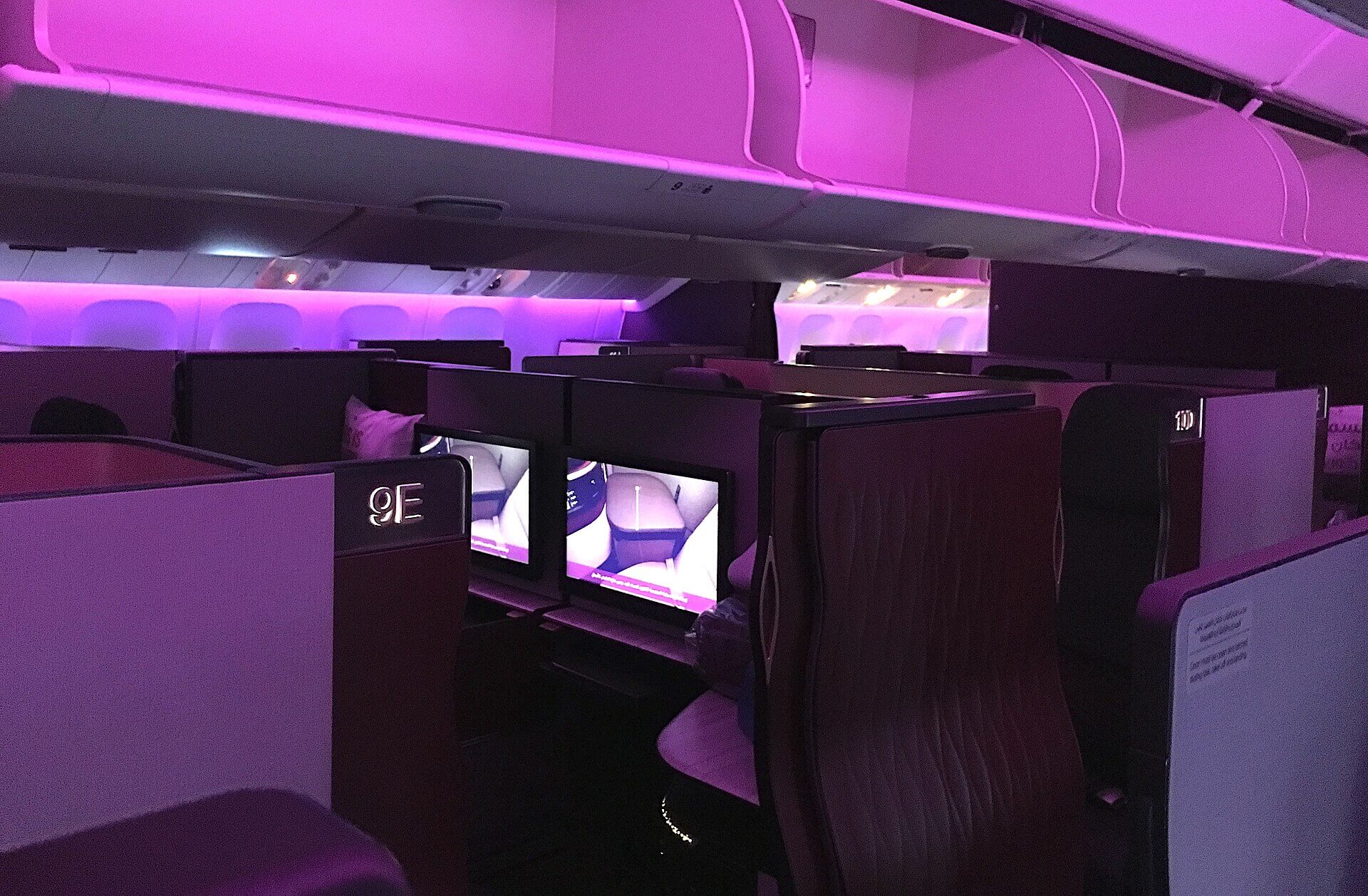
Qsuite Next Gen: Qatar Airways Raises the Bar Again
Nine years after the original Qsuite redefined business class, Qatar Airways has launched its next generation — and the gap between it and the competition has widened again.
The original Qsuite, launched in 2017, introduced something the industry hadn't seen before: fully enclosed suites with sliding doors in a business class cabin, alongside a configurable centre section that could become a double bed or a four-seat social space. It won World's Best Business Class at Skytrax seven consecutive times. And it still wasn't enough — Qatar has now replaced it entirely.
Qsuite Next Gen debuted on the Boeing 777-9, Qatar's newest wide-body, entering service on flagship routes including Doha–New York and Doha–London. The suite is meaningfully larger than its predecessor: seat width in upright configuration has grown from 21.5 to 23 inches, with an additional four inches at hip and shoulder level when lying flat. The privacy door now stands at a full 48 inches — taller than any comparable product in the market. Digitally controlled dividers replace the fixed walls of the previous generation, allowing the centre section to reconfigure even more flexibly.
The technology has caught up with the hardware. Each suite features a 27" 4K screen with wireless device mirroring, Starlink high-speed internet, wireless charging, and a redesigned in-seat minibar. The Diptyque amenity kit — a partnership that began in 2022 — has been refreshed with vegan leather cases in several colourways. The bedding package, already among the best in the sky, has been further refined with a longer mattress and a temperature-regulating duvet designed for the specific climate of a pressurised cabin.
One practical note for travellers: rollout is uneven. The Next Gen product is currently limited to new 777-9 deliveries. Check the aircraft type on your specific flight before booking — the experience difference between Next Gen and the previous generation Qsuite is significant.
23"
Seat width upright — up from 21.5" on the original Qsuite
48"
Privacy door height — taller than any comparable product
27"
4K suite screen with wireless device mirroring
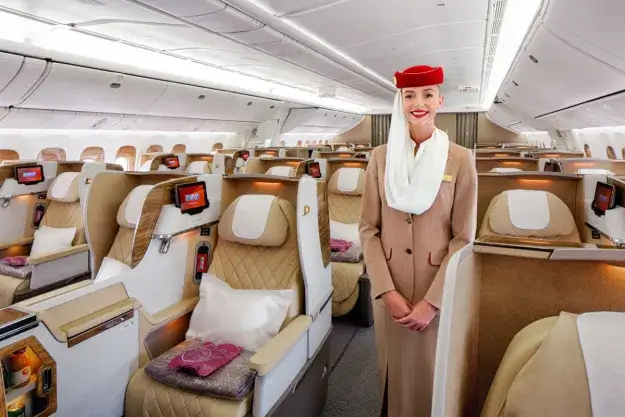
Emirates 777 Business Class: The Retrofit Is Real — and It Changes the Product
Emirates has spent years defending a 2-3-2 business class layout on its 777 fleet that left middle-seat passengers behind the competition. That era is now ending, one aircraft at a time.
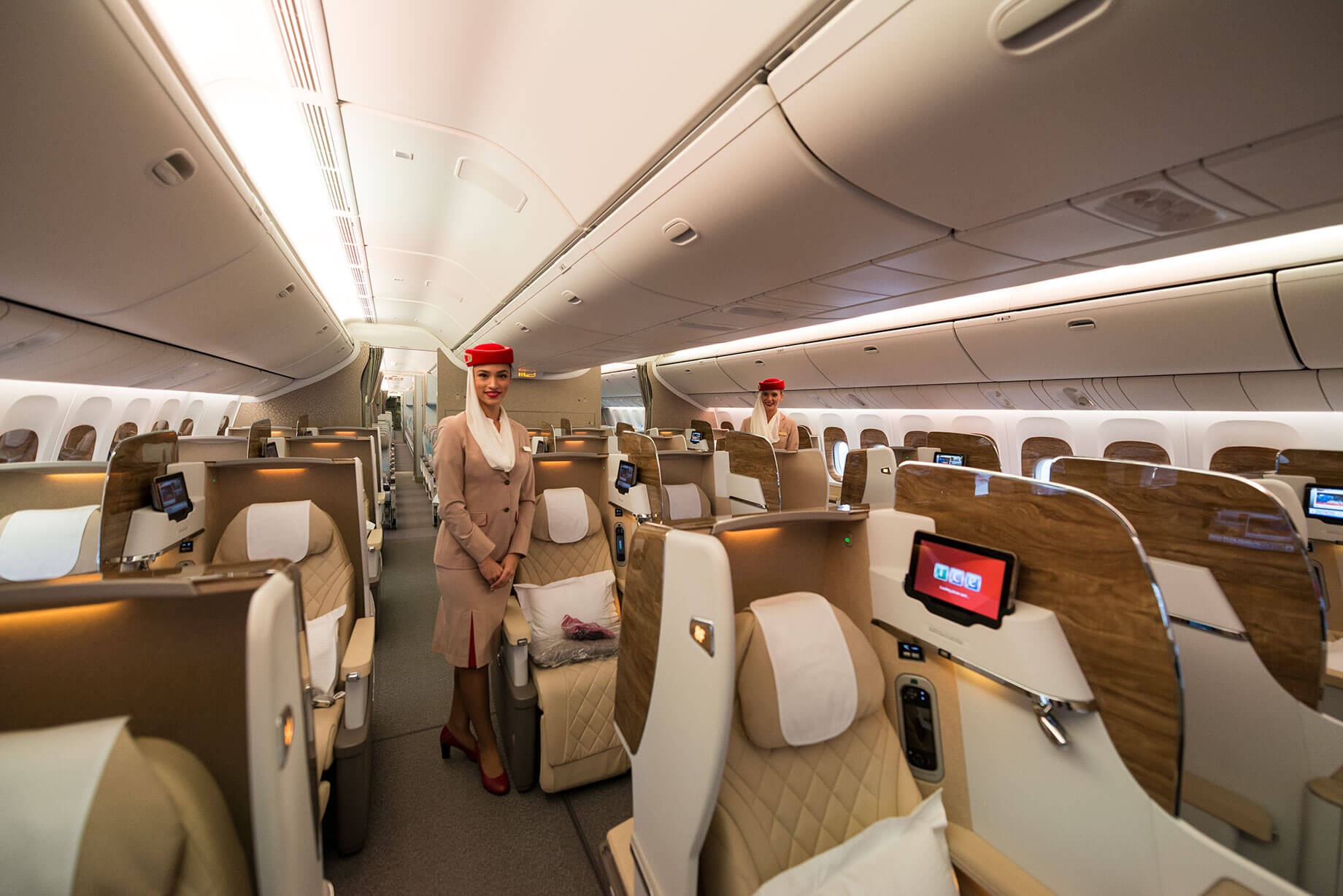
Launched in late 2024 and accelerating through 2026, Emirates' 777 retrofit programme replaces the outdated 2-3-2 configuration with a 1-2-1 staggered layout — every seat with direct aisle access, a 78-inch fully flat bed, and a new 23-inch HD entertainment screen. As of August 2026, 25 out of 120 Boeing 777-300ER aircraft have been retrofitted, with refits continuing at roughly one aircraft every two weeks.
The new product is based on a Safran design, refreshed with Emirates' signature cream leather, darker wood accents, and significantly improved storage. It doesn't reinvent the category — there are no closing doors, which keeps it behind Qatar's Qsuite and Singapore Airlines at the top of the market — but it solves the most pressing problem: no more middle seats, and no more asymmetric access to the aisle for window passengers.
Routes already receiving the new cabin include Madrid, Lisbon, Vienna, Miami, and Riyadh. Kuala Lumpur and Phuket are scheduled for Q4 2026. For travellers flying Emirates from U.S. East Coast gateways, the JFK and EWR routes to Dubai on 777-300ER aircraft are worth verifying before booking — the difference between the old and new product is the difference between an adequate business class and a genuinely good one.
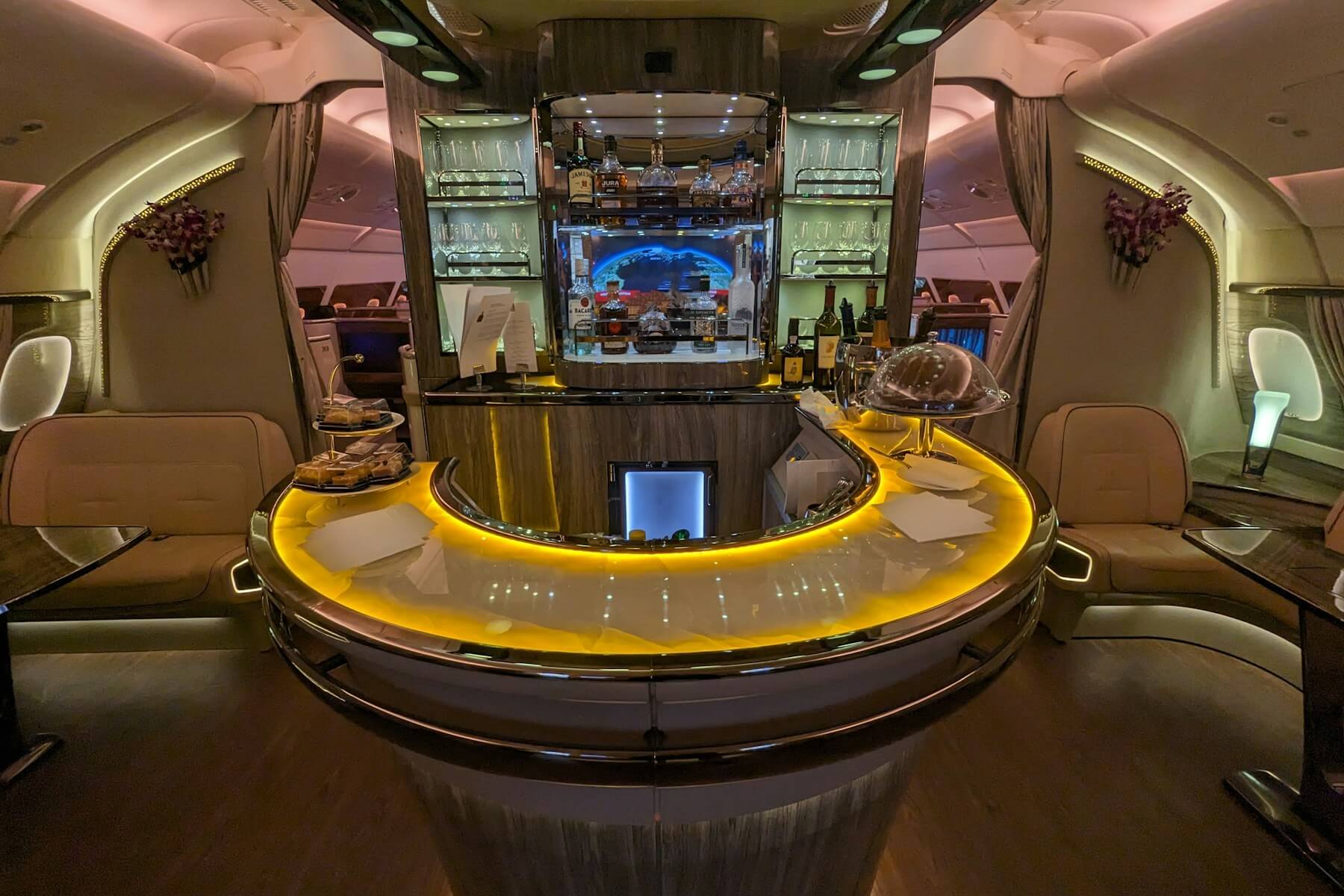
Meanwhile, the A380 fleet continues with its current upper-deck cabin, which remains competitive on its own terms. The famous Emirates A380 bar and lounge — the only social space of its kind in a commercial business class cabin — is unchanged and continues to be one of the more distinctive experiences in long-haul aviation.
Old 777 Cabin
- 2-3-2 layout with middle seats
- Window seats without direct aisle access
- Product trailing Qsuite and top Asian carriers
777 Retrofit (2026)
- 1-2-1 staggered layout, every seat an aisle
- 78-inch fully flat bed, 23" HD screen
- 25+ of 120 aircraft already converted
Quick Briefing
- Singapore Airlines has revealed full details of its next-generation Business Class suites, debuting on retrofitted A350s. The new product features sliding doors, higher suite walls, and a redesigned bed that addresses longstanding criticisms of sleep comfort on the current product. London and Sydney routes are expected to showcase the new cabin first.
- Lufthansa Allegris — the airline's enclosed suite product with a closing door — has expanded beyond its initial A350 routes and is now available on select Boeing 747-8 and A380 departures from Frankfurt and Munich. The Singapore route gains Allegris from October 2026, significantly improving Lufthansa's competitiveness on one of its most premium routes.
- United Airlines has confirmed that new Boeing 787-9 deliveries will carry a redesigned Polaris cabin featuring sliding privacy doors for every seat, an industry first for the airline. The new product also debuts "Polaris Studio" — an oversized front-row position offering extra space. Starlink connectivity will be integrated from launch.
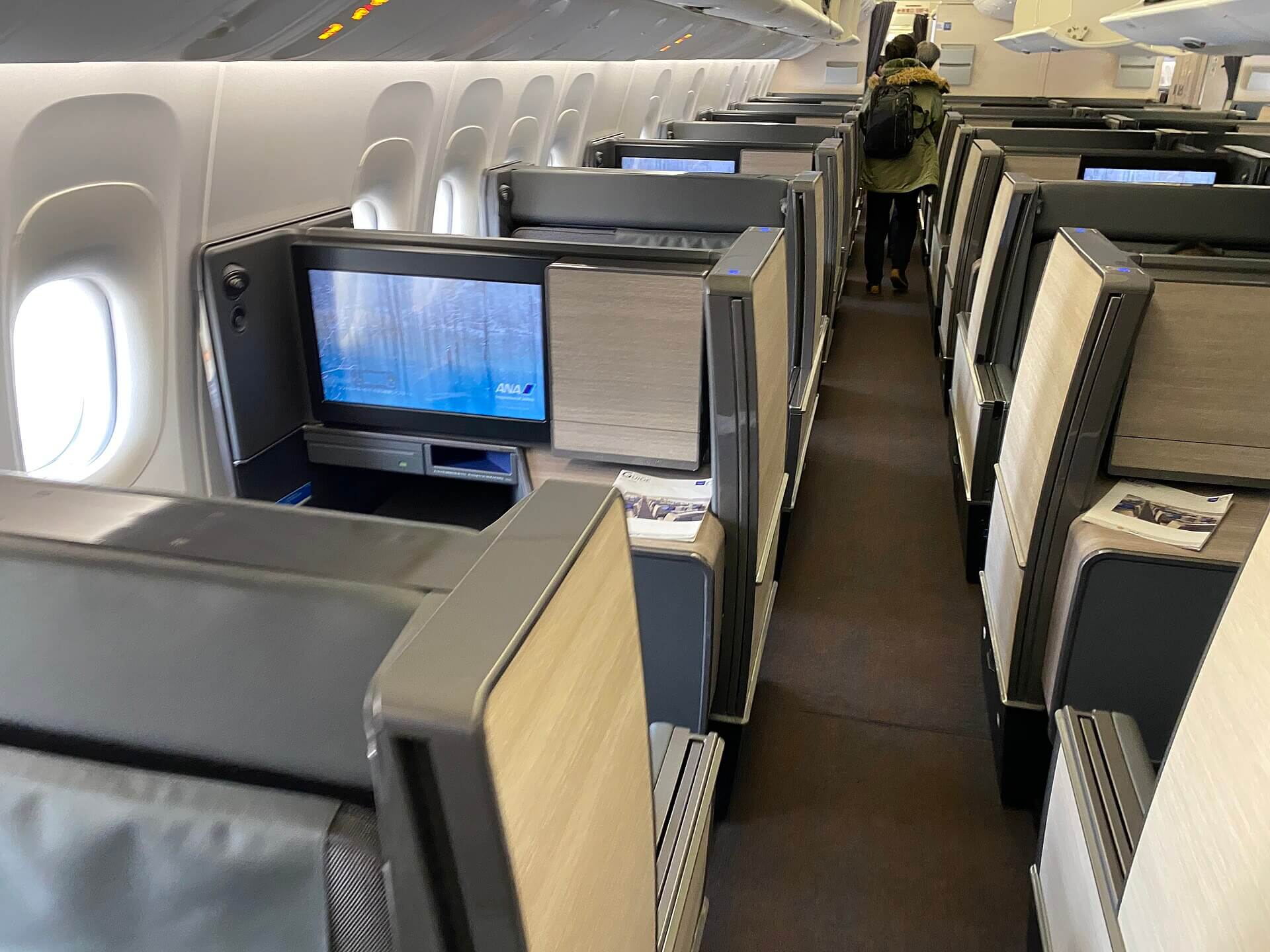
- ANA's "The Room" — consistently rated among the top three business class products globally — is expanding to additional long-haul routes in late 2026, including increased frequency to Europe on aircraft featuring the full enclosed suite product.
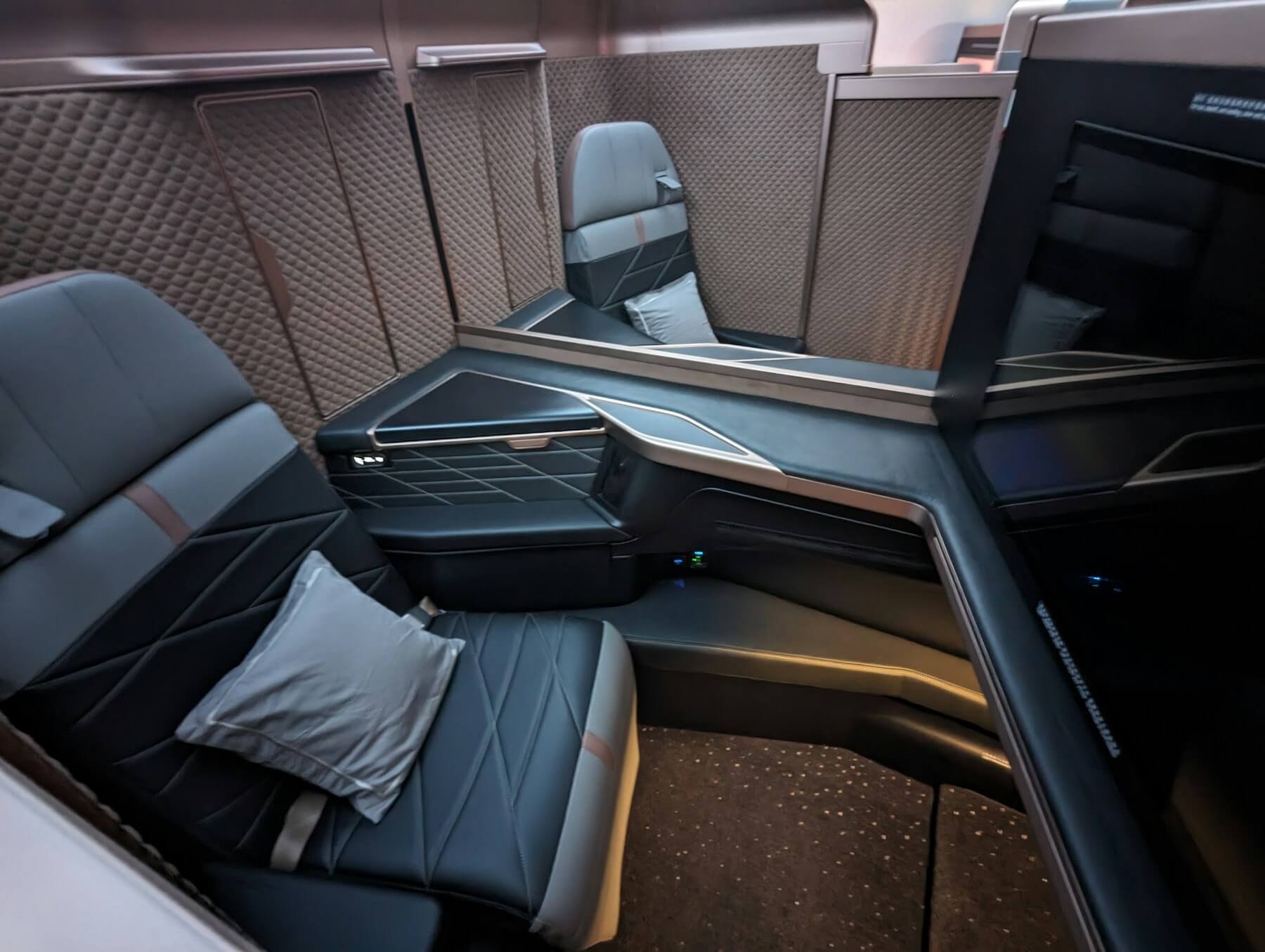
Singapore Airlines Reveals Its Next Business Class — and the Industry Has Been Paying Attention
For years, Singapore Airlines' existing Business Class was considered the benchmark for Asian carriers. The airline has now replaced it with something categorically different.
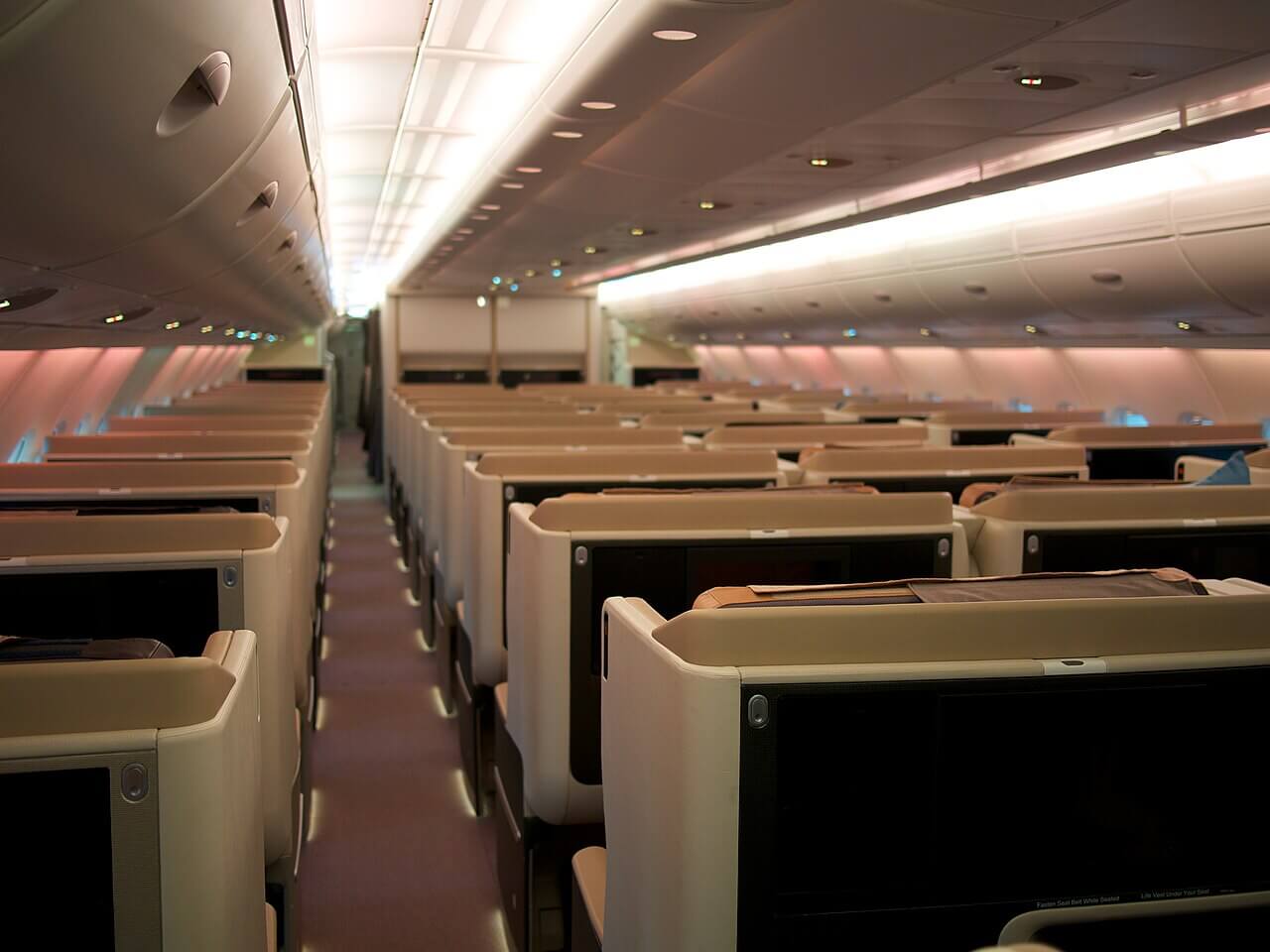
Singapore Airlines' new Business Class suite, revealed in detail in mid-2026 ahead of its A350 retrofit, represents the airline's most significant cabin investment since the introduction of the first private first class suite in 2006. The product has been designed entirely from scratch, not evolved from the existing offering — an unusual choice that reflects how competitive the business class market has become.
The headline feature is a full sliding door, bringing Singapore Airlines into line with Qatar Airways and ahead of most European and U.S. carriers. Suite walls are significantly higher than the current product. The bed configuration has been redesigned, addressing what frequent flyers consistently cited as the weakest element of the existing cabin — the transition from seat to flat and the resulting sleeping surface geometry.
On the retrofitted A350-900s, the business class seat count remains at 42, meaning the reconfiguration delivers more space per seat rather than fewer seats per aircraft. On the ultra-long-haul A350-900ULR fleet — which operates the world's longest routes including Singapore–New York — the business class count increases slightly from 67 to 70, a counterintuitive decision that reflects surging premium demand on ultra-long-haul routes.
London and Sydney are expected to be among the first routes to receive the new product. Travellers booking Singapore Airlines on these routes from late 2026 should verify the aircraft configuration — the gap between the outgoing and incoming products is substantial enough to meaningfully change the journey.
Sliding Door
Full privacy door on every suite — in line with Qsuite, ahead of most U.S. and European products.
Redesigned Bed
New seat-to-flat geometry that addresses the sleep-comfort complaints of the current cabin.
A350 First Routes
London and Sydney expected first. Seat count stays at 42 on the A350-900 retrofit.
The Connectivity Question Is Settled: Starlink Has Won at 35,000 Feet
For a decade, inflight Wi-Fi was the one reliable disappointment of premium travel. That era is over.
The rollout of Starlink's satellite internet on commercial aircraft has been one of the less-discussed but most significant developments in long-haul flying in 2025–2026. Emirates, Qatar Airways, Singapore Airlines, and United have all announced or begun deploying Starlink or equivalent high-bandwidth satellite internet on their premium fleets. The result is a product that works — reliably, at speeds sufficient for video calls and large file transfers — for the duration of a long-haul flight.
For business travellers, this changes the economics of the long-haul journey in practical terms. A 14-hour flight to Asia is no longer lost time in any meaningful professional sense. The ability to run a genuine remote work session at altitude — not just check email and scroll — recalibrates how those hours are valued and booked.
The connectivity upgrade is also accelerating the adoption of personal device integration. Qatar's Qsuite Next Gen allows wireless mirroring of personal devices to the 27-inch suite screen. Singapore's new product features Bluetooth pairing from the outset. The cabin is converging with the office in ways that were not realistic before reliable high-bandwidth connectivity. For frequent flyers who have been waiting for this, the wait is effectively over on the airlines that matter most for long-haul business travel.
The business class market has never been more competitive — which means it's never been a better time to be a passenger.
We track what's launching, what's been retrofitted, and which aircraft are worth specifically requesting. When you book through FlyLuxury, you book knowing exactly what you're getting.
Subscribe to our newsletter
Subscribe to our newsletters and be the first to receive updates on our latest sales and exclusive offers unavailable online